

Brisbane City Council lists river access hubs that it says accept stand-up paddleboards, and Maritime Safety Queensland publishes a code of conduct that names stand-up paddle boards as paddle sport craft. This guide sets out what those sources say about locations and rules, and leaves out hire operators and prices. For paddling from a kayak, see the Brisbane Kayaking Guide.
Where Council lists launch points
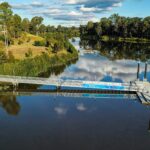
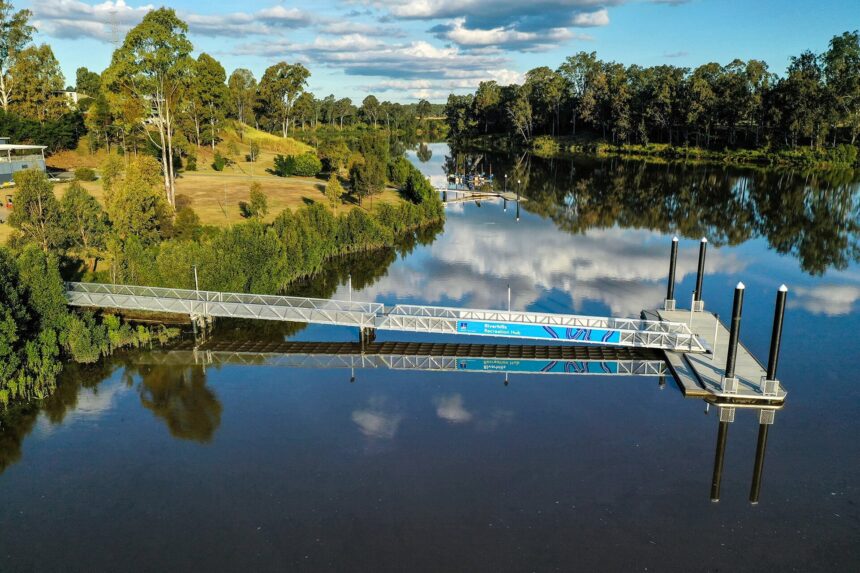
As listed on the Council’s “Find Brisbane River hubs and facilities” page, checked 9 November 2026, the River Access Network is made up of eight river and recreation hubs. The Council names them as New Farm Park, City Botanic Gardens, Murarrie, West End, Dutton Park, Northshore Hamilton, Kingsford Smith Drive and Riverhills.
The same page says the hubs accept passive vessels such as canoes, kayaks and stand-up paddleboards, as well as powered recreational vessels. Each hub has its own Council page, so read the one for your chosen hub before you go.
Time limits and hub rules
These are the limits the Council pages listed when checked on 9 November 2026:
- At City Botanic Gardens, users of the inner fingers of the pontoon can stay up to two hours. At Riverhills, the page says up to two hours unless otherwise signed.
- The Murarrie hub page also lists a 10-minute docking limit, unless signed otherwise, but in the sentence “a pontoon or landing (other than ramps and hubs)”, so it is not a limit for the hub pontoons.
- At City Botanic Gardens, no overnight mooring is allowed, and net casting and crab pots are not allowed.
- The Council asks users to check the size capacity and weight of their vessel against a hub, and to follow the onsite signage at all hubs and river facilities.
Hub status can change, so check the Council’s page for the hub you plan to use.
Lifejackets
Maritime Safety Queensland’s lifejacket rules FAQ (MSQ-162) is an undated PDF, read on 9 November 2026. The wording that “craft” does not include stand-up paddle boards appears in its answer about crossing coastal bars, so it should not be read as saying paddleboarders on the Brisbane River do not need a lifejacket. The same FAQ says lifejackets are important safety equipment on any water vessel. Check Maritime Safety Queensland for what applies to your activity.
The Brisbane River Code of Conduct
The code is a 2015 Transport and Main Roads publication. It says it is available on the websites of Maritime Safety Queensland, Rowing Queensland, Queensland Canoeing and Brisbane City Council. Points from the version checked on 9 November 2026:
- Passive craft will minimise time in the centre third of the river, where commercial and power-driven vessels typically operate.
- Individuals and crews must cross the river in a straight line perpendicular to the bank.
- Stationary passive craft should stay as close to the bank as possible, out of the way of passing vessels.
- Passive craft must not go on the water if visibility is under 1000 metres before departure.
- The code puts the river’s tidal rise and fall at 2 to 2.5 metres, creating a flow of 2 to 4 knots.
- Individuals or crews should not under any circumstances navigate through the centre spans of the William Jolly Bridge and Go Between Bridge.
- In Town Reach and South Brisbane Reach, passive craft need to exercise extra caution and keep a proper lookout for commercial vessels making cross-river trips.
On lighting, the code says passive craft must display a flashing white all-round light visible for two nautical miles, and that all recreational vessels on the water between sunset and sunrise must carry a lighting device for signalling, such as a torch. The code is a 2015 document, so confirm current lighting requirements with Maritime Safety Queensland before paddling near dusk or at night.
Before you go
The code says vessel operators should check the Notice to Mariners before proceeding onto a waterway or river. Also check the Council page for your chosen hub and the Maritime Safety Queensland material on lifejackets and the code of conduct.
Frequently asked questions
Do Council river hubs take stand-up paddleboards?
As listed on Brisbane City Council’s River Access Network page, checked 9 November 2026, the hubs accept passive vessels such as canoes, kayaks and stand-up paddleboards, as well as powered recreational vessels.

Does the lifejacket FAQ mean stand-up paddle boards don’t need lifejackets?
Not necessarily. Maritime Safety Queensland’s lifejacket rules FAQ (MSQ-162, an undated PDF read on 9 November 2026) uses the wording that ‘craft’ does not include stand-up paddle boards in its answer about crossing coastal bars. The same FAQ says lifejackets are important safety equipment on any water vessel. Check Maritime Safety Queensland for the rules that apply to your activity.
How long can I stay at a Council river hub pontoon?
As listed on the Council pages checked 9 November 2026: up to two hours on the inner fingers at City Botanic Gardens and at Riverhills (unless signed otherwise there). Check the page and signage for the hub you plan to use.