


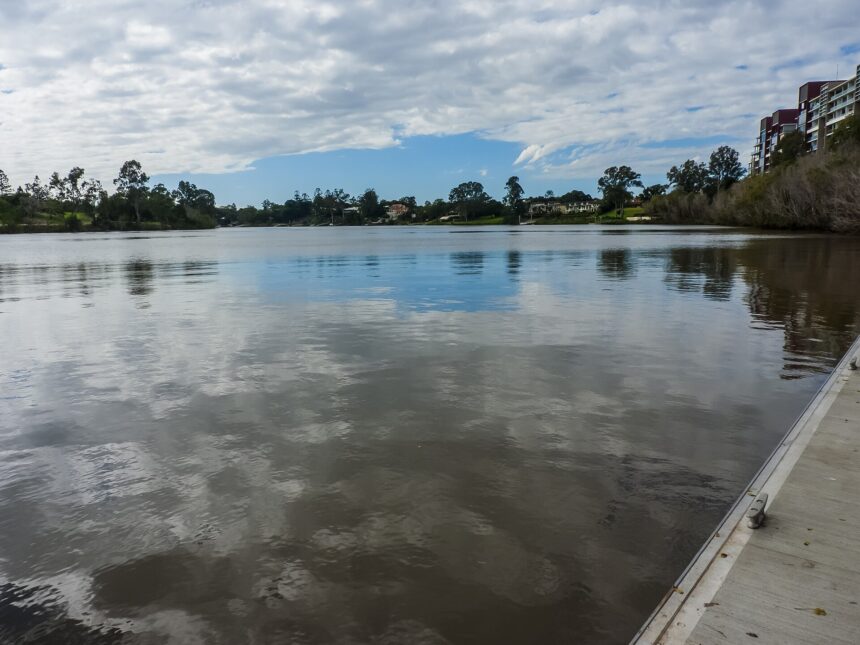
This guide summarises the Brisbane River Code of Conduct guidance for paddlers, plus related Maritime Safety Queensland and Brisbane City Council information. It is a summary of the code, not legal advice, and it does not list tour operators, hire businesses or prices. Wording below follows the pages named, checked 9 November 2026, and can change.
The Brisbane River Code of Conduct
Maritime Safety Queensland hosts a Brisbane River Code of Conduct for passive craft; the copy checked for this guide carries a 2015 footer. It is written for the benefit of all commercial and recreational users of the river. Brisbane City Council’s river hubs page tells readers to read the code to learn how to use the river safely. Because the checked copy is dated 2015, confirm with Maritime Safety Queensland that it is the current edition.
The code defines paddle sport craft as including, but not limited to, canoes, kayaks and stand-up paddle boards. For stand-up paddleboarding specifically, see Stand-Up Paddleboarding Near Brisbane.
Where to paddle on the river
- The code says passive craft will minimise time in the centre third of the river, where commercial and power-driven vessels typically operate.
- Crossings are to be made in a straight line perpendicular to the bank.
- Stationary passive craft should stay as close to the bank as possible, out of the way of passing vessels.
Lights and visibility
In its low-light section (4.1), which deals with conditions such as around sunrise and sunset, the code says passive craft must display a flashing white all-round light visible for two nautical miles. The code also says recreational vessels, including passive craft, on the water between sunset and sunrise must carry a lighting device for signalling to attract attention. If visibility is less than 1000 m before departure, the code says passive craft must not go on the water.
Tides and hazards
The code says the Brisbane River has a 2-2.5 m rise and fall that creates a tidal flow of 2-4 knots (4-8 km/h). It lists hazards including pontoons and pylons, moored vessels, bridge footings, shallow water, submerged rocks and debris, and notes that low tide can expose sand or mud banks.
Ferry terminals and CityCat zones
Where a commercial vessel is within 100 m of a ferry terminal or pontoon, the code says the passive craft must stop outside that zone and wait for the vessel to dock. Passive craft are not permitted to stop, turn or cross the river within the exclusion zone. When passing a docked commercial vessel, the code asks for at least 13 m of separation.
Lifejackets
A Maritime Safety Queensland bulletin says that from 1 December 2024 a lifejacket must be worn when crossing a designated coastal bar in a sea or surf kayak, among other craft. The same bulletin says that requirement does not apply to users of stand-up paddle boards. The bulletin covers other heightened-risk situations too, so read the current Maritime Safety Queensland lifejacket guidance before paddling rather than relying on this summary.
A Transport and Main Roads media alert dated 23 June 2025 said enforcement would begin from 1 July 2025, and that fines for not complying would start at $333. Fine amounts can change.
Launching and resting
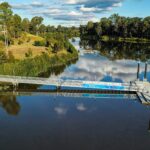
Council says its River Access Network is made up of 8 river and recreation hubs. Its page says people can launch and retrieve a boat, canoe, kayak or other vessel from a ramp along Brisbane’s waterways, and can stay at a pontoon or landing (other than ramps and hubs) for up to 10 minutes unless signed otherwise.
For other ways to see the water, see Brisbane River Activities: Ferries, Kayaking and More.

Frequently asked questions
Do kayaks need a light on the Brisbane River?
In its low-light section (4.1), the Brisbane River Code of Conduct says passive craft must display a flashing white all-round light visible for two nautical miles, and that recreational vessels on the water between sunset and sunrise need a signalling lighting device. This is the code’s guidance, not legal advice (2015 edition checked 9 November 2026; confirm it is current).
How close can a kayak go to a CityCat terminal?
The code describes a 100 m zone around ferry terminals; passive craft must stop outside it while a commercial vessel is docking, and must not stop, turn or cross in the exclusion zone.
Is a lifejacket required for stand-up paddle boards?
A Maritime Safety Queensland bulletin says its coastal-bar lifejacket requirement does not apply to users of stand-up paddle boards. Check current MSQ guidance for other situations.