
Brisbane City Council says the city is home to a wide range of native animals that all play an important role in maintaining biodiversity. This article covers koalas, flying-foxes and Australian brush-turkeys, plus swooping season. Where to go to see wildlife is covered in a separate article.
Koalas
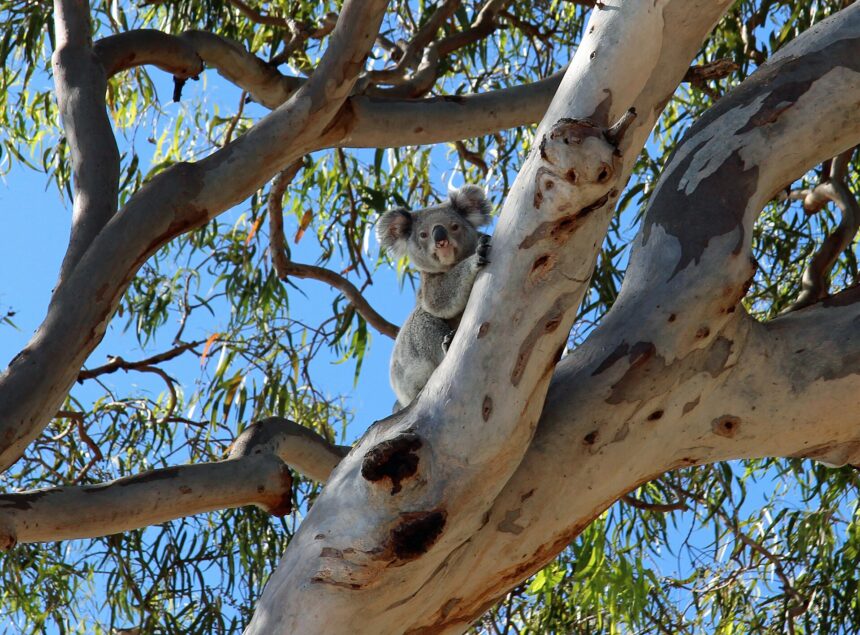
Council says national and state laws classify koalas as an endangered species, as listed on its koalas page and checked 9 November 2026. The same page says koalas tend to hang out in trees in backyards, urban parks and vegetated areas where they find food and shelter. Council states that it protects koalas as significant under the Brisbane City Plan 2014.
Council lists habitat loss, dog attacks, vehicle strikes and disease as threats to koalas across Australia. For dog owners, it advises walking dogs on a leash and installing an animal-proof fence to prevent koalas climbing into the dog’s area. As listed on that page, checked 9 November 2026, sick, injured or orphaned koalas can be reported to the RSPCA Native Animal Ambulance Service on 1300 ANIMAL.
Flying-foxes
Council says there are three species of flying-fox in Brisbane: the Black, Little Red and Grey-headed flying-fox. It describes Australia’s native flying-foxes as the largest flying mammals in the world, and says they play an important role in the reproduction, regeneration and dispersal of plants across the region.
By day flying-foxes gather in groups that Council calls camps. It says these are located across the city, in urban areas adjacent to waterways, with most on Council land. The Queensland Government states that flying-foxes, referred to as fruit bats, are a protected species under the Nature Conservation Act 1992. Council’s advice is not to attempt to catch flying-foxes, which it describes as unlawful and risky.
Australian brush-turkeys
Council says brush-turkeys are protected under the Nature Conservation Act 1992, and that both the birds and their mounds are protected under State legislation. It describes the male as building a nesting mound of soil and plant litter, which it says can be two to four metres wide and more than one metre high.
On their role, Council says brush-turkeys prey on insects and grubs in woodland habitats and suburban gardens, and help disperse native vegetation seeds through their faeces. It also says baby brush-turkeys are independent as soon as they are born, resulting in a low survival rate. For backyards, Council advises not feeding them, covering any compost, and not chasing, killing or injuring the birds, their mounds or their eggs.
Swooping birds
As listed on its living-with-wildlife page, checked 9 November 2026, Council says that between July and December some of Brisbane’s native birds may become defensive and swoop people near their nests. In the magpie section of the same page it says to expect more swooping activity between June and December. Two sections of that page give slightly different windows, so treat them as a rough guide and check the current Council page.
Living alongside wildlife
Council says living with native animals can help control pest insects and spread native vegetation. It also advises strongly against feeding wild birds or animals.
Frequently asked questions
How many flying-fox species are in Brisbane?
Brisbane City Council says three: Black, Little Red and Grey-headed.
Are brush-turkeys protected?
Council says the birds and their mounds are protected under State legislation.
When do native birds swoop in Brisbane?
As listed on Council’s living-with-wildlife page (checked 9 November 2026), July to December generally and June to December in the magpie section.