

This guide reads Brisbane City Council heritage register entries for places the register places in Yeerongpilly, together with the Council’s park-locations dataset, and reports what each prints with the date it was read.
Brisbane Golf Club Clubhouse on Tennyson Memorial Avenue
At 13 November 2026, the Brisbane Heritage Register “Brisbane Golf Club Clubhouse” page (page revised September 2020) says that the Brisbane Golf Club Clubhouse is at 70 Tennyson memorial Avenue, Yeerongpilly, Queensland 4105. Per the Brisbane Heritage Register “Brisbane Golf Club Clubhouse” page (page revised September 2020) at 13 November 2026, the Brisbane Golf Club was the first golf club to be established in Brisbane, initially at Chelmer in 1896 and then relocated to Yeerongpilly in 1903. As read on 13 November 2026, the Brisbane Heritage Register “Brisbane Golf Club Clubhouse” page (page revised September 2020) reports that about one hundred and ten acres were offered for purchase at Yeerongpilly in 1903. The Brisbane Heritage Register “Brisbane Golf Club Clubhouse” page (page revised September 2020) states, as of 13 November 2026, that the new site had the advantages of being near permanent water and a railway station for golfers travelling further than a buggy ride distance. The Brisbane Heritage Register “Brisbane Golf Club Clubhouse” page (page revised September 2020), read on 13 November 2026, records that by 1904 the course was the first full-length course in Queensland. According to the Brisbane Heritage Register “Brisbane Golf Club Clubhouse” page (page revised September 2020) as read on 13 November 2026, the clubhouse was completed in May 1904 and the use of the Chelmer course ceased. At 13 November 2026, the Brisbane Heritage Register “Brisbane Golf Club Clubhouse” page (page revised September 2020) says that on 29 July 1909 the clubhouse was destroyed by fire. Per the Brisbane Heritage Register “Brisbane Golf Club Clubhouse” page (page revised September 2020) at 13 November 2026, the cause of the 1909 fire was attributed to rats chewing on wax matches left in a locker. As read on 13 November 2026, the Brisbane Heritage Register “Brisbane Golf Club Clubhouse” page (page revised September 2020) reports that the current clubhouse, designed by Hall & Dods, was constructed in early 1910. The Brisbane Heritage Register “Brisbane Golf Club Clubhouse” page (page revised September 2020) states, as of 13 November 2026, that the timber and tin clubhouse, dating from 1910, retains core features of its Hall & Dods design.
Trains, a bridge and wartime camps
The Brisbane Heritage Register “Brisbane Golf Club Clubhouse” page (page revised September 2020), read on 13 November 2026, records that in 1911 the Golf Club convinced the Railway Department that some trains on the Corinda line should stop opposite the clubhouse on holidays and weekends. According to the Brisbane Heritage Register “Brisbane Golf Club Clubhouse” page (page revised September 2020) as read on 13 November 2026, a permanent platform was constructed in 1912, as well as an earth bank and a wicket gate providing access from the rail line to the golf club. At 13 November 2026, the Brisbane Heritage Register “Brisbane Golf Club Clubhouse” page (page revised September 2020) says that the golf club gate was in use as a stop up until the mid 1950s. Per the Brisbane Heritage Register “Brisbane Golf Club Clubhouse” page (page revised September 2020) at 13 November 2026, a bridge over the rail line was built in 1916 to facilitate road traffic. As read on 13 November 2026, the Brisbane Heritage Register “Brisbane Golf Club Clubhouse” page (page revised September 2020) reports that the Australian Army took possession of the short course in 1942 and established the 17th Australian Personnel staging camp. The Brisbane Heritage Register “Brisbane Golf Club Clubhouse” page (page revised September 2020) states, as of 13 November 2026, that part of the Yeerongpilly course was the US Tennyson Army Camp, built in 1943 under the direction of the Allied Works Council. The Brisbane Heritage Register “Brisbane Golf Club Clubhouse” page (page revised September 2020), read on 13 November 2026, records that since 1983 the club has completed extensive earthworks to improve the flow of Moolabin Creek through a re-alignment. According to the Brisbane Heritage Register “Brisbane Golf Club Clubhouse” page (page revised September 2020) as read on 13 November 2026, the club honour boards list trophies dating back to 1898, which are the oldest in Australia.
A Federation house at 12 Tees Street
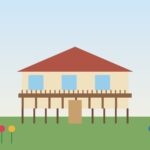
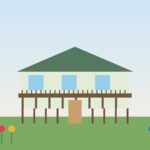
At 13 November 2026, the Brisbane Heritage Register “12 Tees Street, Yeerongpilly” page (page revised September 2020) says that 12 Tees Street is at 12 Tees Street, Yeerongpilly, Queensland 4105. Per the Brisbane Heritage Register “12 Tees Street, Yeerongpilly” page (page revised September 2020) at 13 November 2026, this large federation styled house was completed sometime between 1913 and 1915 for Samuel and Lillian Roberts. As read on 13 November 2026, the Brisbane Heritage Register “12 Tees Street, Yeerongpilly” page (page revised September 2020) reports that Yeerongpilly was first called Logan Junction. The Brisbane Heritage Register “12 Tees Street, Yeerongpilly” page (page revised September 2020) states, as of 13 November 2026, that in the early 1890s the Yeronga district became fashionable as an address for wealthy Brisbane residents and a number of large homes were constructed. The Brisbane Heritage Register “12 Tees Street, Yeerongpilly” page (page revised September 2020), read on 13 November 2026, records that residential development in the area was slow, impeded by a lack of public transport within the district. According to the Brisbane Heritage Register “12 Tees Street, Yeerongpilly” page (page revised September 2020) as read on 13 November 2026, the development of Yeronga began in earnest about 1912 and reached a peak of activity after the First World War. At 13 November 2026, the Brisbane Heritage Register “12 Tees Street, Yeerongpilly” page (page revised September 2020) says that the Roberts family built the house soon afterwards and retained ownership until around 1944, when it was purchased by John Aboud. Per the Brisbane Heritage Register “12 Tees Street, Yeerongpilly” page (page revised September 2020) at 13 November 2026, the dwelling is constructed of timber with a terra cotta tile roof.
Trainmen’s Quarters on Fairfield Road
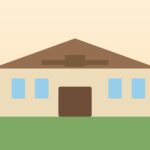
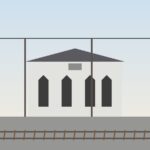
As read on 13 November 2026, the Brisbane Heritage Register “Trainmen’s Quarters” page (page revised April 2021) reports that the Trainmen’s Quarters is at 740 Fairfield Road, Yeerongpilly, Queensland 4105. The Brisbane Heritage Register “Trainmen’s Quarters” page (page revised April 2021) states, as of 13 November 2026, that the former trainmen’s quarters were constructed circa 1940 as part of the Clapham Junction rail yards. The Brisbane Heritage Register “Trainmen’s Quarters” page (page revised April 2021), read on 13 November 2026, records that the former trainmen’s quarters were used to accommodate train crews required to work away from their homes. According to the Brisbane Heritage Register “Trainmen’s Quarters” page (page revised April 2021) as read on 13 November 2026, the building has since been adapted for use as administration offices. At 13 November 2026, the Brisbane Heritage Register “Trainmen’s Quarters” page (page revised April 2021) says that the building is important as a rare surviving example of a twentieth century prefabricated transportable railway building. Per the Brisbane Heritage Register “Trainmen’s Quarters” page (page revised April 2021) at 13 November 2026, a similar building was demolished to make way for the Inner City Bypass, and another, larger example remains extant in Chinchilla. As read on 13 November 2026, the Brisbane Heritage Register “Trainmen’s Quarters” page (page revised April 2021) reports that the building is a single storey low-set precast concrete building with a detached kitchen and dining room wing.
Parks in the Council dataset
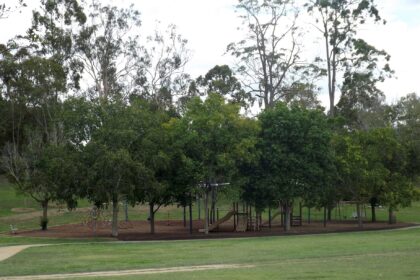
At 13 November 2026, the Brisbane City Council park-locations open dataset (API records for the suburb “YEERONGPILLY”, which shows no visible page date; dataset metadata gives modified 30 September 2026 (UTC)) says that the dataset returns 4 park records for the suburb YEERONGPILLY. At 13 November 2026, the Brisbane City Council park-locations open dataset (API records for the suburb “YEERONGPILLY”, which shows no visible page date; dataset metadata gives modified 30 September 2026 (UTC)) says that the dataset lists Godiva Avenue Park at 10 Godiva Avenue in the suburb YEERONGPILLY. At 13 November 2026, the Brisbane City Council park-locations open dataset (API records for the suburb “YEERONGPILLY”, which shows no visible page date; dataset metadata gives modified 30 September 2026 (UTC)) says that the dataset lists Allawah Street Park at 12 Allawah Street in the suburb YEERONGPILLY. At 13 November 2026, the Brisbane City Council park-locations open dataset (API records for the suburb “YEERONGPILLY”, which shows no visible page date; dataset metadata gives modified 30 September 2026 (UTC)) says that the dataset lists Fairfield Road Park (No. 989A) at 989A Fairfield Road in the suburb YEERONGPILLY. At 13 November 2026, the Brisbane City Council park-locations open dataset (API records for the suburb “YEERONGPILLY”, which shows no visible page date; dataset metadata gives modified 30 September 2026 (UTC)) says that the dataset lists Moorooka Lions Bicent. Picnic Grnd Park at 77 Albemarle Street in the suburb YEERONGPILLY.
Related reading
For the wider register, see Brisbane Heritage-Listed Buildings Guide. For parks across the city, see Parks in Brisbane Worth Knowing: A Guide.
Frequently asked questions
When did the Brisbane Golf Club move to Yeerongpilly?
At 13 November 2026, the Brisbane Heritage Register “Brisbane Golf Club Clubhouse” page (page revised September 2020) says that the Brisbane Golf Club was the first golf club to be established in Brisbane, initially at Chelmer in 1896 and then relocated to Yeerongpilly in 1903.
What was the Trainmen’s Quarters on Fairfield Road used for?
At 13 November 2026, the Brisbane Heritage Register “Trainmen’s Quarters” page (page revised April 2021) says that the former trainmen’s quarters were used to accommodate train crews required to work away from their homes.
Who was 12 Tees Street built for, according to the register?
At 13 November 2026, the Brisbane Heritage Register “12 Tees Street, Yeerongpilly” page (page revised September 2020) says that this large federation styled house was completed sometime between 1913 and 1915 for Samuel and Lillian Roberts.