


The Redland City Council Schedule of Local Heritage Places, read on 13 November 2026, opens each Cleveland entry with a short account of the town: Cleveland was gazetted as a township in 1850, with land sales commencing in 1851. The card for 219 Middle Street adds that Cleveland was a potential site for a proposed northern shipping port in the mid-19th century. According to the same card, from the late 1850s it was realised that Cleveland would not become the northern shipping port, and the town turned instead to local industries and a seaside resort. The cards describe a second phase of development between the 1880s and the 1930s, encouraged particularly by the construction of the railway line in 1889.
A Middle Street cottage from the first phase
The Redland City Council Schedule of Local Heritage Places, read on 13 November 2026, says in the place card for 200 Middle Street that the residence was built before 1874 and was part of the first phase of settlement at Cleveland. The card says the first phase had, by the late 1870s, included a number of jetties, hotels, residences and boarding houses, a post office and weekly mail service, and a district school and court house. It dates the building at the rear of the property to before 1874 because it was on the land at the time of Robert Cribb’s purchase. The card says Cribb served on the Queensland Legislative Committee as a Member for East Moreton, and that the Thorne family acquired the property in 1888.
On the building itself, the card describes a two-storey timber cottage with the upper storey accommodated within a high-pitched gable roof (attic). In the assessment on a card with an inspection date of 10 January 2017, built elements from the period of first settlement at Cleveland are considered rare and are an endangered aspect of Redland’s cultural heritage.
Shore Street East: the shops beside the railway
The Redland City Council Schedule of Local Heritage Places, read on 13 November 2026, includes a card for 1 Shore Street East and one for 3 Shore Street East, each with an inspection date of 20 January 2017. Both cards describe the commercial centre of Cleveland during the second phase of development. They state that Shore Street East became the hub of commercial activity from the 1880s until the 1930s. The card for 1 Shore Street East says the Cleveland railway station was located directly across the street, providing the primary mode of transport for the produce of the district.
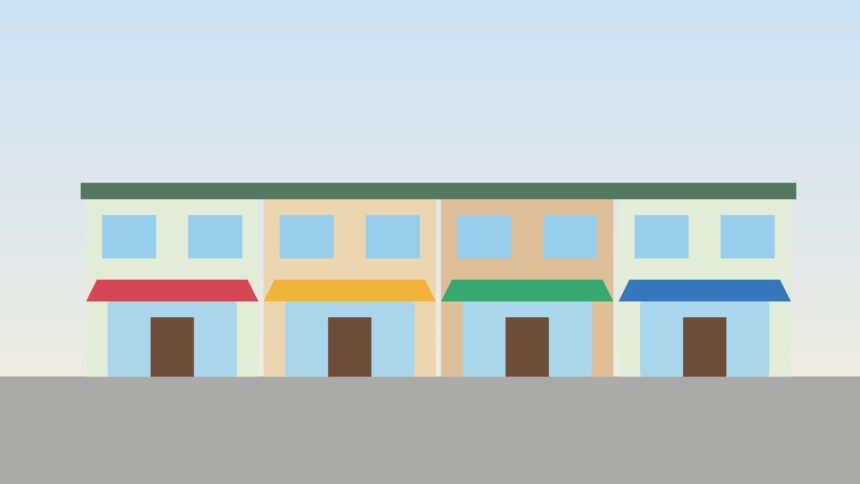
For 1 Shore Street East, the card says the land was subdivided in 1922. It records that Charles Sayer, described as a well-known local merchant and shopkeeper, purchased the property in May 1929 and also owned the adjacent property at 3 Shore Street East at the same time. Sayer held the title until 1939, according to the card. The card adds that a top floor room was later used as meeting rooms for the Cleveland Chamber of Commerce, and describes a two storey building with a corrugated iron pyramid roof.
The dates for the shop and offices at 1 Shore Street East differ within the one card. Its Historical Context section says it is thought that the shop and offices were built in the 1920s, while its Statement of Significance section gives the former shop and offices building as built 1930-1932.

The card for 3 Shore Street East covers a shop and a fruit shed. It says the commercial premises is believed to have been built in the 1920s and the fruit shed was likely constructed between 1911 and 1916. The card says the commercial premises included a newsagency selling magazines, stationery and confectionary, and that Sayer ran a fruit and vegetable delivery service locally. It reports that the former fruit shed was reportedly used as the storage area to supply the adjacent grocery store (now demolished) and other customers via the adjacent railway. In its physical description, the fruit shed is a timber frame fruit storage shed, low set on timber stumps, with a simple gable roof.
Both cards make the same assessment of the pair. In its 2017 inspection card, 1 Shore Street East is said to form, together with 3 Shore Street East, a coherent remnant of the commercial core of Cleveland, and surviving examples of commercial buildings from this phase are described as now rare. The 3 Shore Street East card of the same date says the same of the pair.
Houses from the second phase
The Redland City Council Schedule of Local Heritage Places, read on 13 November 2026, says in the card for 219 Middle Street that the property was one of many holdings owned by G.J. Walter before it was sold in 1919 to Charles Elfert. According to the card, Elfert reportedly constructed a house at 219 Middle Street and a sawmill alongside at 217 Middle Street in the same year. The card describes a highset weatherboard bungalow with a hip roof, c.1919.
The card for 19 North Street says Cleveland magistrate William Taylor originally purchased the property in 1885 and that John Rickert occupied it in 1888. It describes the house as indicative of the shift between the first and second phases of Cleveland’s development, believed to have been built c. 1880s. The physical description is of a lowset weatherboard residence with a gable roof to the core.
The card for Shellim, at 79 Passage Street, says the residence was constructed about 1910 during the second phase of development in Cleveland. It records that John Alexander acquired the 1-rood town lot in 1889 and sold it in 1913 to Francis Gilbert Burnett, and that the Hucker family bought the place in 1925 and owned it until 1976. The card describes a highset timber framed weatherboard clad bungalow with a short ridge iron roof and a flying gable above the verandah entrance.
The card for Callan Doon, at 61 Princess Street, says the bungalow is believed to have been built in 1927 as a farmhouse. It says the land consisted of 7 lots, each 1 acre, mostly used for small crop farms from about 1886, and that the Dean family purchased the broader site in 1927 and built the current residence known as Callan Doon. The card records that the residence was constructed by Brown & Broad Homes Ltd. It also says the farm was subdivided in 1970 and the residence remained on lot 1. In its description, Callan Doon is a c.1927 Californian bungalow style dwelling with a large projecting front gable over the front entry porch.
A Shore Street North cottage
The entry headed Craigelea gives its street address as 151 Shore Street North, Cleveland, and has an inspection date of 20 December 2016. The card is headed Craigelea; its text uses the spelling Craigielea. The card says the Deed of Grant for the allotment was given to George Vowles of Ipswich in 1852. It says that by 1889 the property was purchased by neighbour William Ross, a prominent Councillor and member of the first Cleveland Divisional Board, and that his residence was the adjacent former Courthouse. According to the card, the name Craigielea appears in the records after the sale to Thomas Kirk in 1899, and the Kirk family resided there until 1915. The card then says they sold the property to a family friend, Agnes Walter, wife of George John Walter, a prominent figure and local councillor. It describes a low set, timber framed residence with a steep pitched, corrugated iron pyramid roof, and records that the building was renovated in 2013.
Frequently asked questions
What do the Redland heritage cards say about Shore Street East in Cleveland?
The Redland City Council Schedule of Local Heritage Places, read on 13 November 2026, says in the card for 1 Shore Street East that Shore Street East became the hub of commercial activity from the 1880s until the 1930s.
What was the fruit shed at 3 Shore Street East used for?
The Redland City Council Schedule of Local Heritage Places, read on 13 November 2026, says in the card for 3 Shore Street East that the former fruit shed was reportedly used as the storage area to supply the adjacent grocery store (now demolished) and other customers via the adjacent railway.
When was Cleveland gazetted as a township, according to Redland City Council?
The Redland City Council Schedule of Local Heritage Places, read on 13 November 2026, says in the card for 219 Middle Street that Cleveland was gazetted as a township in 1850, with land sales commencing in 1851.