
What was Expo 88?
World Expo 88 was an international exhibition held in Brisbane between 30 April and 30 October 1988. It was officially opened by Queen Elizabeth II on 30 April 1988, under the theme “Leisure in the age of technology”.
The site was South Bank. The Queensland State Archives says 42 hectares was dedicated to construction of the South Bank Parklands and gives the initial budget estimate as $645 million.
How many people came?
The published figures differ, so this guide does not give a single headline number.
- The Queensland State Archives says Expo drew more than 18 million people, averaging about 100,000 a day.
- The State Library of Queensland says over 15 million visitors experienced Expo.
One possible explanation is the difference between counting guests and counting every entry. Two secondary sources report about 18.6 million visits once staff and VIPs are included. Neither is the official post-event report, which this guide could not retrieve, so treat any guest-only figure as unsettled. That the “more than 15 million” and “more than 18 million” figures may be counted on different bases is an inference, not something the Archives or the Library state.
Getting around: the monorail
The monorail cost $12 million, ran on a 2.3 km track and could carry up to 44,000 visitors a day. After Expo, three trains went to Europa-Park in Germany and the remaining train and some track went to Sea World.
A library opens just before Expo
The State Library of Queensland was officially opened at South Bank on 8 April 1988 by Premier and Arts Minister Mike Ahern, “on the eve of” Expo in the Library’s words, with a celebration weekend on 9 and 10 April. The Library also holds digitised Expo photographs and organiser records.
From Expo site to public parkland
After Expo the site was cleared. The Queensland Government intended to sell the land to commercial developers, but the public successfully lobbied for public parkland. South Bank Parklands officially opened on 20 June 1992, with an estimated 70,000 people attending on opening day. Early features included a man-made beach and lagoon with CBD views, garden and rainforest walks, and picnic and barbecue areas. The South Bank chairman said: “Expo was for 182 days, this is forever”.
A former Expo site became public parkland instead of being sold for commercial development. The Royal Historical Society of Queensland goes further, saying Expo “turned Brisbane from a big country town to a world class city”. That is a judgement rather than a measurement.
What survives from Expo 88
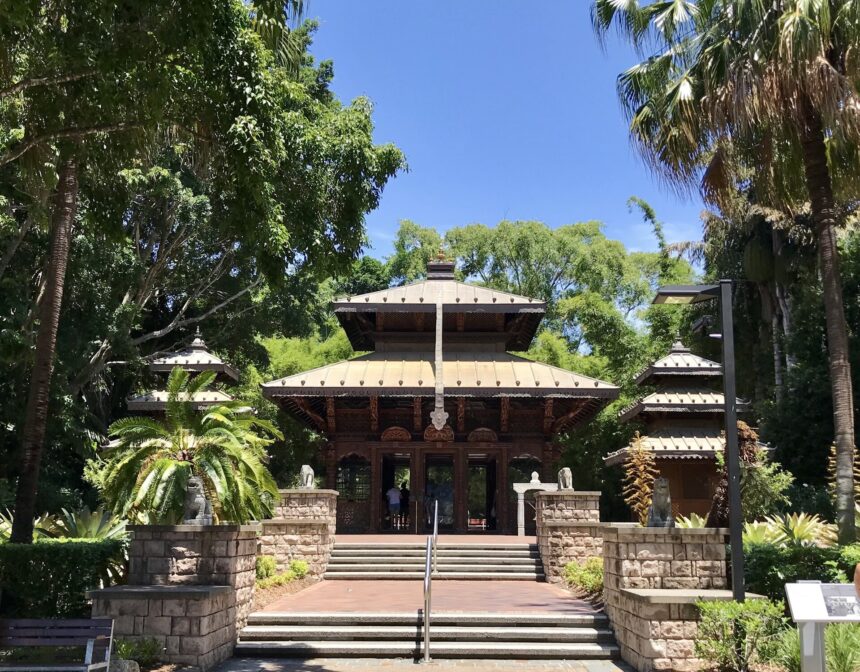
- Nepal Peace Pagoda. The only international pavilion that remained on site, saved by a petition of about 70,000 signatures.
- Wheel of Brisbane. A 60 metre Ferris wheel installed in 2008 for Expo’s 20th anniversary. This guide has not checked whether it is operating now.
- Skyneedle. Built for Expo at 88 metres and heritage listed in 2002; the Archives says it was sold in 2015 to the Pradella group and incorporated into a residential development.
- Japanese Garden. Gifted to Brisbane after Expo and moved to Mt Coot-tha Botanic Gardens in 1989.
- Ken Done’s “Australia” sign. Restored and on display at Caboolture Heritage Village. Confirm opening arrangements with the venue before you go.
Frequently asked questions
When was Expo 88 held?
From 30 April to 30 October 1988 in Brisbane.
How many people visited Expo 88?
Sources differ. The Queensland State Archives says more than 18 million people; the State Library of Queensland says over 15 million visitors. Secondary pages suggest about 18.6 million visits including staff and VIPs.
What happened to the Expo 88 site?
It was cleared. The government intended to sell it to developers, but public lobbying led to parkland, and South Bank Parklands opened on 20 June 1992.
What Expo 88 pavilion is still at South Bank?
The Nepal Peace Pagoda was the only international pavilion that remained on site, according to the Queensland State Archives.