




This guide explains what counts as a severe thunderstorm, when “storm season” is said to run, and what the warning words mean. It is general background only and does not describe any current weather.
What makes a thunderstorm “severe”
The Bureau of Meteorology (BoM) does not treat every storm the same way. It classes a thunderstorm as severe when it expects or observes any one of four things. The first is hail of 2 cm or larger, roughly the size of a $2 coin. The second is wind gusts of 90 km/h or higher. The third is heavy rainfall that could cause flash flooding, such as flooded roads or creeks. The fourth is a tornado.
A storm only needs to reach one of the four to qualify.
When is storm season?
There is no single start and end date, because different agencies describe the season differently. The BoM says the warmer months from September to March are the peak season for severe thunderstorms. The Queensland Government’s severe-storm guidance tells people to pay attention to forecasts during storm season, which it gives as November to April. Brisbane City Council uses a third window, October to March, as the period when pre-filled sandbags are available for collection. Outside that window, from April to September, council says pre-filled sandbags will not be available unless the BoM forecasts a significant severe weather event.

Lightning and warnings
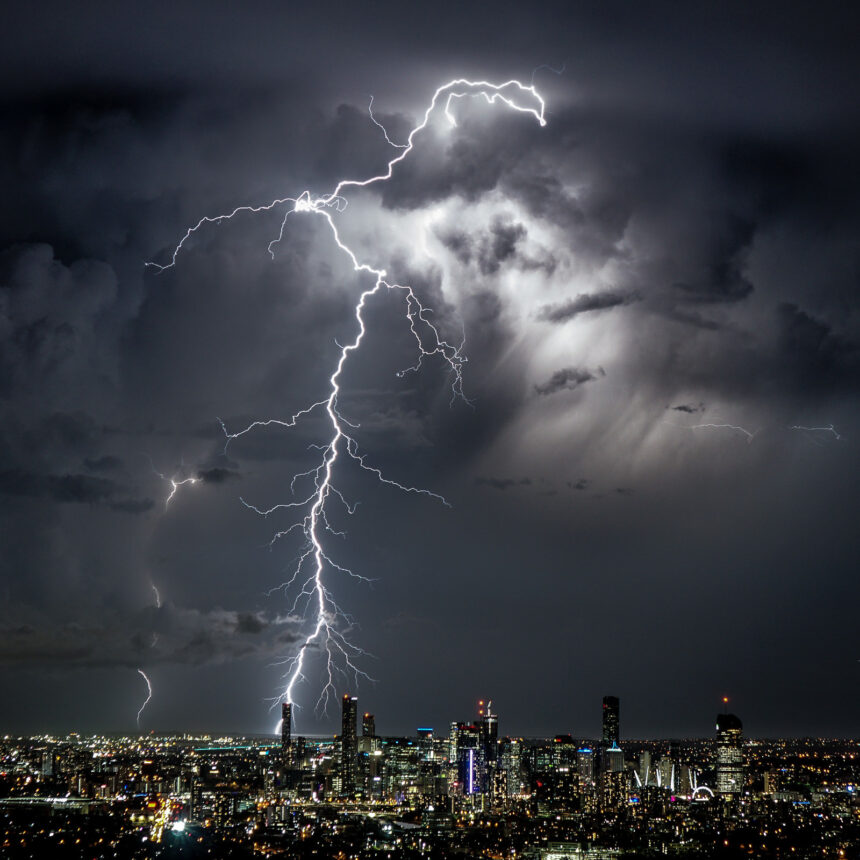
Every thunderstorm has lightning. That is why the BoM does not issue warnings for lightning alone, since its warnings focus on storms more likely to cause damage or other impacts.
Warning terms in Queensland
Queensland’s emergency warning terms are set out below. “Advice” means an incident has started and there is no immediate danger, but you should stay up to date in case the situation changes. “Watch and Act” signals a heightened level of threat, with conditions changing and a need to start taking action now. “Emergency Warning” is the highest level: you may be in danger and need to act immediately.
The Queensland disaster website states that warnings using the system are not replacing the Bureau’s own warnings. Emergency Alert messages, where they are used, are sent from the mobile number +61 444 444 444.
Brisbane residents can also register with the Brisbane Severe Weather Alert Service, which council says provides free alerts for severe thunderstorms.
What the official advice says to do
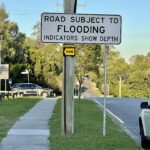
The Get Ready Queensland guidance for storms is direct. When a severe storm warning is issued, it describes this as the cue to get everyone and everything inside immediately. Once inside, it says to stay away from windows and doors until the storm has fully passed. If you are driving, it advises not to try to beat the storm home, and to stop clear of trees, powerlines and creeks. It also says never to drive through floodwater.
Brisbane City Council says preparing your home can reduce the impact of a storm, cyclone, bushfire or flood. It also advises securing or removing loose objects from yards, decks and balconies, and regularly trimming trees and branches.
Related News
Putting it together
Hail, damaging gusts, flash-flood rain or a tornado each qualify a storm as severe. On timing, the BoM puts the peak from September, while Queensland Government guidance runs to April, so the season is better treated as a range that depends on the agency than as a fixed calendar. Check the current BoM forecast and warnings, and the official Queensland and council channels, rather than relying on this article for anything happening now.
FAQ
When is storm season in Brisbane? Sources give different windows: the BoM says September to March is peak, Queensland Government guidance says November to April, and Brisbane City Council’s sandbag service uses October to March.
What counts as a severe thunderstorm? One that produces, or is expected to produce, 2 cm or larger hail, 90 km/h or stronger gusts, flash-flooding rain or a tornado.
Does the BoM warn about lightning? Not on its own. Every thunderstorm has lightning, and warnings focus on storms more likely to cause damage.