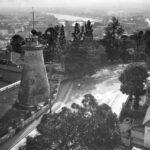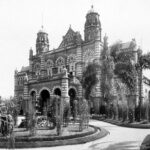

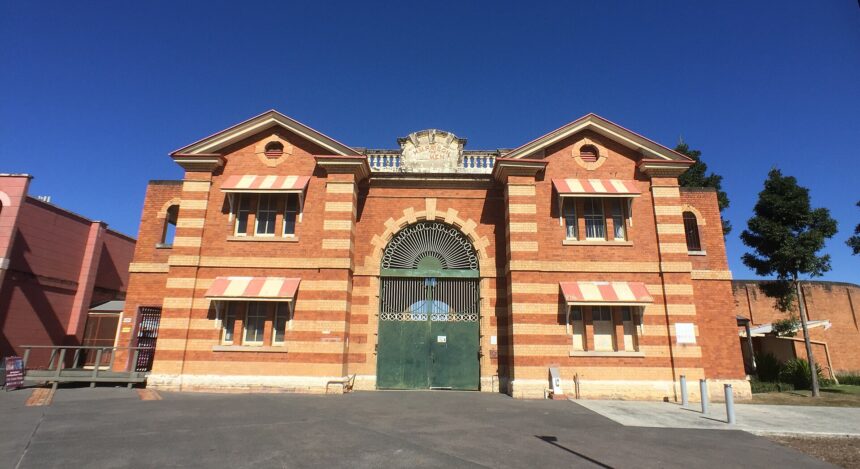
Brisbane City Council’s heritage page, revised September 2022, lists the Boggo Road Gaol Complex at 21 Boggo Road, Dutton Park. The council page gives the alternative name State Prison for Women at Boggo Road. It classes the place as Federation 1890-1914, prison / gaol. The operator of the site’s tours describes the stark red brick walls and imposing guard tower on Annerley Road as iconic for all the wrong reasons. Parts of this history involve executions, and this guide reports only what each named source says and no more. Where a claim rests on one source, the text names it.
Name and origins
The operator’s history page says the name comes from the road that led to the prison, which became a boggy quagmire after rain. The same page says the gaol was officially known as the Brisbane Prison. Wikipedia, last edited 14 September 2026, says that in the 1850s the district was known unofficially as “Boggo” or “Boggo Scrub”. It says it has been suggested the name came about because the area was very boggy in wet weather. It also says another theory is that Boggo was a corruption of an Aboriginal word meaning “two leaning trees”. Wikipedia says Boggo Road was officially renamed Annerley Road in 1903.
The 1883 gaol and its neighbours
Wikipedia says that in 1863 land off Boggo Road was set aside as a government reserve, finally proclaimed a jail reserve in 1880. Queensland Places records that the new gaol was opened in Annerley Road, formally Boggo Road, in 1883. The operator’s page says the gaol opened in 1883 as the Brisbane Gaol. It says the gaol was used mainly as a holding prison for those serving short sentences or on remand. Wikipedia says the first cellblock opened on 2 July 1883, contained 57 cells and was constructed using materials from the demolished Petrie Terrace Jail.
Queensland Places says the Dutton Park primary school was opened next door in 1884. It says the Diamantina Orphanage was opened just beyond the gaol in 1883.
Executions
The operator’s page says the gaol’s initial infamy came from its use as a place of execution. Wikipedia says the first cellblock, later known as No. 1 Division, was the scene of hangings. It says those hangings included that of Ernest Austin in 1913, which it describes as the last execution in Queensland. The operator’s page names Ernest Austin as the last man to be executed in the state of Queensland.
The women’s prison and No 2 Division
A Queensland Heritage Register extract, reproduced on a boggoroadgaol.com.au blog page dated 14 October 2015, says No 2 Division opened in 1903 as the State Prison for Women at Boggo Road South Brisbane. The extract says it was built adjacent to a male prison that was established on the site in 1883 and later became No 1 Division. It says the female prison was constructed in response to a 1887 Parliamentary Inquiry, which recommended that the “separate system” be introduced, that is a separate cell for each prisoner. It says the State Prison for Women, with 80 cells, was designed by the Department of Public Works. The operator’s page likewise says a new purpose-built separate women’s gaol was created in 1903.
The extract says the complex remained a female prison until 1921, when Brisbane Prison was reorganised and divided into three divisions, and No 2 Division was used for long term prisoners transferred from St Helena. It says the female prison was relocated to a building on the southern end of the prison reserve. The operator’s page says that after nearly 20 years of use the women’s gaol was closed and its female occupants shifted to another part of the prison site. It also says that in the 1920s the men of the St Helena Island prison in Moreton Bay were moved into the former women’s gaol. The operator says the renamed Number Two Division became home to those serving the longest sentences. The extract says that in the mid 1970s No 2 Division became a maximum security prison.
Unrest and closure, and where the sources differ
The operator’s page says that in the 1980s Number Two Division became the focal point of intense national media scrutiny following a series of dramatic escapes, hunger-strike, riots and roof-top protests. The register extract says the final years of unrest precipitated the establishment of the Commission of Review into Corrective Services in Queensland.
The extract says No 2 Division was decommissioned in January 1989 and No 1 Division closed in July 1992. The operator’s page says Number Two Division was finally closed in 1989. Queensland Places, in its Dutton Park suburb history, says the Boggo Road gaol was decommissioned in 1989. The extract says that after No 1 Division closed all structures were demolished except some cells and an observation tower immediately adjacent to No 2 Division.
The sources differ on the last closure. The operator’s page says the entire prison complex shut its doors forever in 2002, after 119 years in operation, when the Brisbane Women’s Correctional Centre was closed. The same page also says that for 109 years the gaol dominated the skyline of the capital of Queensland. This guide quotes both figures as the page words them, and they are not the same. Wikipedia says the women’s prison operated until 2000 and was demolished in 2006. This guide reports both dates as stated and does not choose between them.
Heritage listing and the surviving section
The blog page says that after a lobbying effort by the National Trust and prison officers, the Queensland Government agreed on 14 December 1992 to retain No 2 Division as a museum under the supervision of the Department of Environment and Heritage. At 10 November 2026 the council page gave the Queensland Heritage Register entry date as 15 February 1993. The register extract’s Criterion B text says it is the only surviving intact gaol in Queensland reflecting 19th century penological principles and a rare Australian example of a prison specifically built for women. The same blog page says the information it reproduces is only part of the full register entry and should not be taken as an official entry.
The extract says No 2 Division is enclosed by a 6 m high brick wall containing a main entrance gate, gatehouse and an observation tower in the south western corner. It says the original cell blocks (E and F) each contain 42 separate cells. Wikipedia says that in 1992, after closure as a prison facility, No. 2 Division became home to the Boggo Road Gaol Museum.
The operator’s page says that in December 2012 the section was reopened and would become a tourist attraction for Queensland. At 10 November 2026 the same page, which carries a 2012-2024 copyright notice, said Number Two Division is today the only remaining section of Boggo Road Gaol. It said the section is heritage listed and will never be demolished. The register extract, by contrast, says some cells and an observation tower remained immediately adjacent to No 2 Division after the demolitions.
Notable inmates named by the operator
The operator’s page names Slim Halliday, the “Houdini of Boggo Road”, who escaped twice and became one of Australia’s most famous escapologists. It also names Patrick Kenniff as Australia’s last bushranger.
This guide does not cover tours, opening hours or prices.
Related guides on this site: Brisbane Convict Origins: Moreton Bay Penal Settlement; St Helena Island National Park History: Moreton Bay’s Penal Settlement; Brisbane Heritage-Listed Buildings Guide; Customs House Brisbane: History and Architecture.
Frequently asked questions
When did Boggo Road Gaol open?
Queensland Places, read on 10 November 2026, says the new gaol was opened in Annerley Road, formally Boggo Road, in 1883.
Why was it called Boggo Road Gaol?
The operator’s history page, read on 10 November 2026, says the name comes from the road that led to the prison, which became a boggy quagmire after rain. Wikipedia also reports another theory that Boggo was a corruption of an Aboriginal word meaning “two leaning trees”.
Is the gaol on the Queensland Heritage Register?
As at the council page read on 10 November 2026, yes: the Brisbane City Council heritage listing gives the register entry date as 15 February 1993.
When did the gaol close?
The sources read on 10 November 2026 give different dates for the last closure. The operator’s page says the entire complex shut in 2002, when the Brisbane Women’s Correctional Centre closed, while Wikipedia says the women’s prison operated until 2000. For Number Two Division, the operator says it was finally closed in 1989, and a Queensland Heritage Register extract on a blog page says it was decommissioned in January 1989.