

This guide focuses on birds at places managed by Brisbane City Council, with background from the Queensland Government and Birds Queensland. Hours, rules and species lists are as listed on those pages, checked 9 November 2026, and can change. For wildlife more broadly, see Brisbane for Wildlife Lovers, and for mammals and reptiles see Brisbane Native Wildlife You May Meet.
Boondall Wetlands
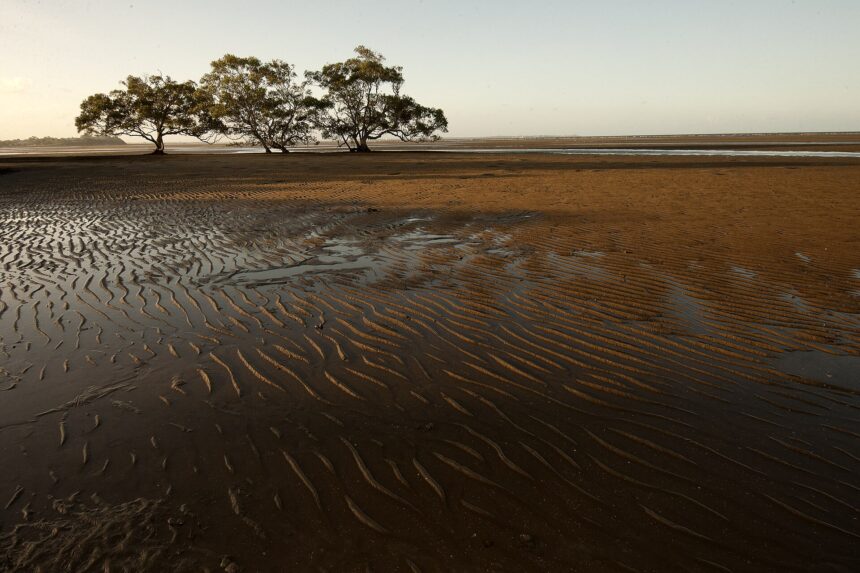
Brisbane City Council describes Boondall Wetlands as Brisbane’s largest wetlands, covering about 1,150 hectares. The council says more than 190 native bird species live in and visit the wetlands. It lists ducks, egrets, herons, grebes, geese and cormorants among them, along with whimbrels, godwits, plovers, tattlers, sandpipers and curlews. It also lists kingfishers, rainbow bee-eaters, scrubwrens and swifts, and black-shouldered and brahminy kites, Australian kestrels and ospreys.
The council says the wetlands are part of the Asian-Australasian Flyway and attract large numbers of international migratory shorebirds from September to April. It says the shorebirds travel up to 13,000 kilometres from areas in Asia. Its page mentions bird hides where visitors can watch shorebirds, and a boardwalk through mangroves. Not every bird is a visitor: Australian white ibises and whistling kites live in Australia year-round and breed locally.
Some of the birds are tied to Japan. The council signed an agreement in 1998 with Narashino City to protect shorebirds at both sites, and some of the arriving birds come from areas that include the Yatsu Higata tidal flats. The council lists mangroves, tidal mudflats, saltmarshes, hypersaline flats, swamplands, grasslands, woodlands and remnant rainforest among the wetlands’ habitats. The wetlands are also listed under the Ramsar Convention as a wetland of international significance.
As listed on the council page, Boondall Wetlands is open 6am to 7pm daily, and dogs must be on a leash at all times. On foot, the council lists three easy walking trails from 100 metres to 2 kilometres, and the Anne Beasley Lookout gives views of the wetlands and Moreton Bay. Birds Queensland describes access via Gateway Arterial Road (Boondall Entertainment Centre exit) and a short loop trail through swamp paperbark to a boardwalk and a bird hide overlooking Nudgee Creek.
Tinchi Tamba Wetlands
Brisbane City Council says Tinchi Tamba Wetlands, at Wyampa Road in Bald Hills, covers more than 380 hectares. The council names eastern curlews, sharp-tailed sandpipers and whimbrels, and also avocets, royal spoonbills, Pacific herons and Australian white ibis. It says the migratory shorebirds visit from as far away as Siberia, Mongolia and Alaska.
The council describes a 1-kilometre track through open grasslands to the bird hide, and a 3-kilometre track that includes a boardwalk over saltmarshes and mangroves. As listed on the council page, the wetlands are open 24 hours, and leashed dogs are allowed. Birds Queensland describes parking at Deep Water Bend Reserve and numerous paths that suit birding. It says Hills Creek can have many waders at the right time of year, while the Pine River is too busy with speedboats to be good for birding. Its Tinchi Tamba page says brolgas and black-necked storks have been recorded there, and also mentions mangrove honeyeaters and bar-shouldered doves. Magpie geese are reported at a different place, the pond at Harold Kieely Park on Bracken Ridge Road. Its tips are practical: a scope helps at the main site, and insect repellent may be essential.
Bushland birdwatching
The council names spangled drongos, crested hawks and dollarbirds at Chermside Hills Reserves and suggests spotting birds from Little Cabbage Tree Creek Bridge. It says the reserves offer 11 walking tracks, easy and moderate, ranging from 350 metres to 1.7 kilometres.
The council’s Shelley Road Park page says visitors can look for rare birds such as the Eastern Whipbird or the Speckled Warbler, and for birds of prey including hawks, owls and falcons. It places the park on Brisbane’s outskirts in Kholo and warns that tracks may be affected by rainfall and overland flow.
For Brisbane Koala Bushlands, the council names pale-headed rosellas, scarlet honeyeaters, sacred kingfishers and wedge-tailed eagles.
Shorebird timing
Shorebirds need rest as well as food. The council asks visitors to walk quietly, keep their distance and not disturb or spook the birds, because they need energy for long migrations. Staying on designated tracks and taking a phone, a track map and water are the council’s basic advice at Boondall.
The Queensland Government’s WetlandInfo says the austral summer period between December and February is the best time to assess shorebirds, when migratory species are most settled at non-breeding sites (page last updated 2 February 2021). It says shorebirds feed on tidal flats and roost at high tide on nearby land, claypans, saltmarshes, sandspits or sometimes mangroves.
Before you go
Check the council page for each reserve for current hours and track conditions. For more low-cost outings, see Free Nature Experiences in Brisbane, and read Brisbane Outdoor Safety: Heat, Storms and Sun before heading out in summer.
Frequently asked questions
When do migratory shorebirds arrive at Boondall Wetlands?
The council says large numbers of international migratory shorebirds are attracted from September to April.
Are dogs allowed at Boondall Wetlands and Tinchi Tamba?
The council says dogs must be on a leash at all times at Boondall, and leashed dogs are allowed at Tinchi Tamba, as listed on 9 November 2026.
Is there a bird hide at Tinchi Tamba Wetlands?
Yes. The council describes a 1-kilometre track through open grasslands to the bird hide.
What is the best time of year to assess shorebirds in Queensland?
WetlandInfo says the austral summer period between December and February is the best time to assess shorebirds (page last updated 2 February 2021).