


This is a practical, step-by-step guide to getting a household ready: finding out your risk, building a plan and kit, and knowing the rules for staying safe if water does rise. It is general guidance only, not a live flood update.
Step 1: Know your risk
Get Ready Queensland frames preparation as three simple steps: know your risk, make a plan and pack a kit.
Brisbane City Council offers a Flood Awareness Map for this. The map shows the probability of flooding from sources including creek, river and storm tide, and it shows the impact of overland flow flooding. Overland flow is run-off that travels over the land during heavy rainfall, and council notes it can be unpredictable, occurring quickly and for short durations.
The map has limits worth knowing. It does not provide information about the depth or speed of flood water. Council also explains its likelihood labels in plain terms: a high likelihood means a 1 in 20 chance of that type of flooding in any year, while a medium likelihood means a 1 in 100 chance.


Step 2: Make a household plan
Get Ready Queensland asks households to make a severe weather emergency plan so the family knows what to do and who to contact. The state’s flood guidance also lists checking your flood insurance alongside making a plan and packing a kit.
A good plan answers a few plain questions in advance. Get Ready Queensland’s planning conversation includes asking what the household would do if it had to leave home. If you need to evacuate, the official advice is that the safest option is to leave early.

Utilities belong in the plan too. Council’s flood guide says to identify where and how to turn off your gas, electricity, solar power and water supply. If flooding is likely, it recommends storing valuables up high, and unplugging electrical items and turning off electricity and gas mains if authorities instruct you to.
Step 3: Pack a kit
The state’s preparation guidance says to build up enough food and water for at least three days per person, including items your household relies on. It also suggests a battery-operated radio, and spare batteries and charged power banks for torches and devices.
Not every official page uses the same number of days. Brisbane City Council’s kit guidance says, as a guide, to pack enough supplies for a minimum of 3 days, but another Get Ready Queensland page talks about planning to stay at home for at least five days, or more if you are at risk of isolation.
Sandbags: what council says
Council says sandbags can reduce the impact of flooding on your property when used correctly. It advises placing them in front of doorways, roller doors and drainage holes, with the long edges facing the flow of water. A single bag weighs about 18 to 20 kilograms, so council asks you to check your vehicle’s weight limits before collecting them. Stored correctly, bags can last up to 12 months before use.
Related News
Staying safe once water rises
The most important rule is the simplest. The Queensland Government says driving into floodwater is the number one cause of flood-related deaths in the state. Get Ready Queensland’s flood guidance says never to drive, ride, walk or swim in floodwater, and warns that as soon as you enter floodwater, your car can’t protect you.
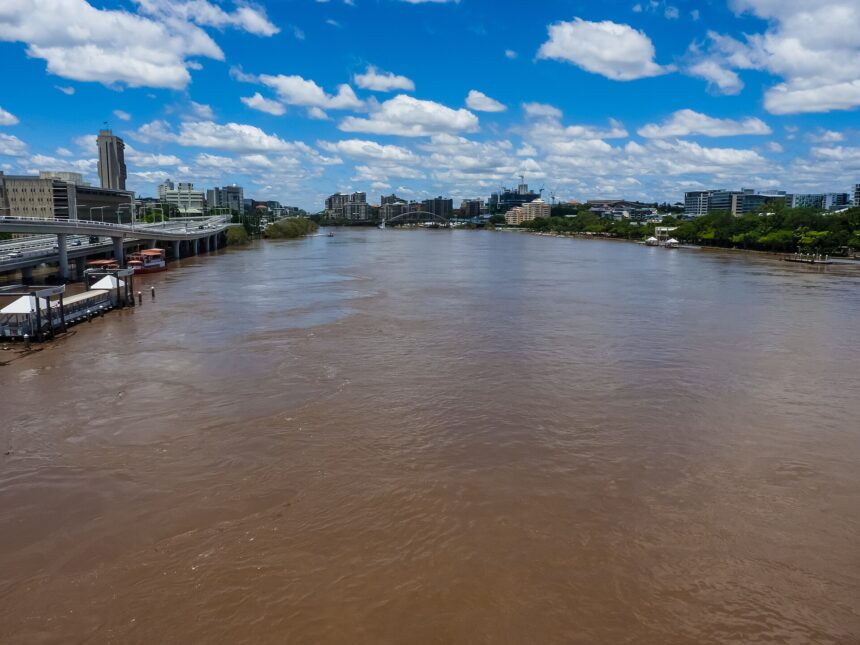
Blue skies are not an all-clear. The same guidance says floods can peak days or even weeks after the rain has stopped.
A short checklist
Before the season: check your risk on the Flood Awareness Map, complete your household plan, pack the kit, and check your flood insurance. If you need to evacuate, the official advice is to leave early. In floodwater, never drive, ride, walk or swim. For live conditions, always use the current BoM, council and Queensland Government channels.
FAQ
How do I check my flood risk in Brisbane? Use Brisbane City Council’s Flood Awareness Map, which shows creek, river and storm tide probability and overland flow impact. It does not show depth or speed.
How many days of supplies should I keep? Official pages differ: at least three days per person, or at least five days if you could be isolated.
Is it safe to drive through shallow floodwater? No. Queensland guidance says never to drive through floodwater, and driving into it is the number one cause of flood-related deaths.