


Getting small children around Brisbane without a car is very doable, but the rules differ a little between buses, trains, trams and ferries. This guide pulls together what TransLink, Queensland Rail and Brisbane City Council publish about travelling with children, prams and strollers, so you know what to expect before you leave the house.
Fares for children
Fare rules change more often than the practical rules, so treat this section as a snapshot. At 9 November 2026, per TransLink, children aged 4 and under travel free and do not need a ticket. At the same date, TransLink says children aged 5 to 14 in South East Queensland should use a child go card. Check the TransLink children page before you travel in case the fare settings have moved on.
If your child goes to school, TransLink notes that they may be eligible for the School Transport Assistance Scheme. That scheme is separate from everyday family travel, so it is worth a look if the trip to school is a daily one.
Prams and strollers on buses
Buses are where the rules are most specific. TransLink asks you to fold the pram and store it in the luggage rack during busy morning and afternoon times, when the driver says there is not enough room, on a bus that is not wheelchair accessible, or when the wheelchair space is occupied or needed. At other times, a child can stay seated in the pram.


When you do stay in the pram, TransLink says to park it in the designated wheelchair space with the brake on, keep the child secured in the harness, and hold the pram during the trip so it cannot tip or slide. One practical point: TransLink staff are not required to help fold and load prams. If you are travelling alone with a baby and a lot of gear, a lightweight, easy-fold stroller will make peak-hour trips less stressful, and that is simply common sense rather than an official rule.
Most buses are accessible, with a low-floor entry, a ramp and space for wheelchairs and mobility scooters. On Brisbane Metro, there is an automated ramp at the front door for prams and mobility devices.

Trains and trams
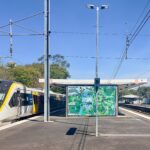
On trains, TransLink says wheelchairs and mobility scooters can be taken on every service, and staff deploy ramps at the assisted boarding point in the middle of the platform. Queensland Rail’s pram advice is straightforward: apply the pram brakes while you wait, and stay well behind the yellow line. Board with the pram facing you, lifting the front wheels over the gap, and when you get off, bring the pram out rear wheels first.
Station gates can be fiddly with a pram. At gated stations you can ask staff for help or use the wider accessible fare gates. Queensland Rail also asks you to make sure your child is secured with the pram harness before boarding, and to keep them secured on the train. If you use a ramp, wait until it is in place and stable before rolling the pram on.
Spaces near the door are shared. Queensland Rail asks passengers to vacate a reserved space if a person using a mobility aid needs it, so be ready to shuffle along. TransLink adds that priority seats on trains are near the door in every carriage. G:link trams also take wheelchairs and mobility scooters on all services, with the driver arranging the ramp near the front of the tram.
Ferries and the river
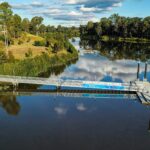
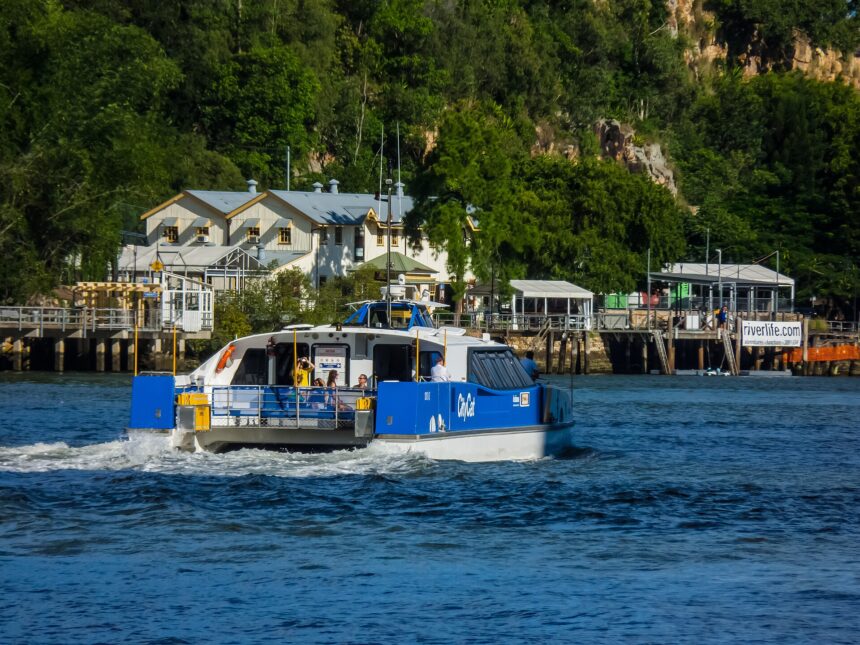
Ferries can be a highlight for children, and the accessibility picture is good on the main service. TransLink says all CityCat ferries are fully accessible, but Cross River Ferry services are not. If you rely on a pram, plan around that difference. Brisbane City Council also notes that ramp gradients at ferry terminals can change with the tide, so allow extra time and take it slowly on a steep ramp.
Bags, shopping and what to carry
You can bring luggage and shopping bags on South East Queensland services provided there is space. In practice that means a big day out, with a pram, a nappy bag and a picnic, works best outside the busiest commuter windows, which are also the times buses ask pram users to fold up.
A note on what is not covered
TransLink’s pram guidance on its public transport page covers buses only; it does not describe the rules for trains, trams or ferries. For those, the Queensland Rail advice above is the most detailed official guidance, and it is worth checking with the operator if you are unsure that your pram will fit or a space will be free.
For more family outings that work without a car, see our guides to pram-friendly walks and river activities.
Frequently asked questions
Do children under 5 need a ticket on TransLink?
At 9 November 2026, TransLink says children aged 4 and under travel free and do not need a ticket. Check the TransLink children page for current rules.
Can my child stay in the pram on a Brisbane bus?
At times other than busy morning and afternoon periods, a child can stay seated in the pram, parked in the wheelchair space with the brake on and the harness fastened. TransLink asks you to fold the pram in busy periods or when the space is needed.
Is the Cross River Ferry accessible?
TransLink says Cross River Ferry services are not accessible, while all CityCat ferries are fully accessible.
Will staff help me fold my pram?
TransLink says its staff are not required to help fold and load prams, so a stroller you can fold yourself is useful.