

A Brisbane summer afternoon can be too hot for the playground and too long to spend on the couch. This guide is about shade, indoor cool-downs and staying safe in the sun, using Queensland Government, Cancer Council and Brisbane City Council information. For water play and public pools, see our separate guides rather than this one.
Why a hot day needs a plan
Children handle heat differently from adults. Queensland HeatSafe says they do not sweat as effectively as adults, have a larger body surface compared to their size so they absorb more heat, and may not understand the early signs of heat stress. The Queensland Government heat and sun safety page lists babies and children under 4 among those at risk in hot weather.
That is why HeatSafe advises keeping children indoors during the hottest part of the day, 10am to 3pm. If your day out has to include that window, make it an indoor stop and save the outdoor time for the early morning or late afternoon.
Shady outdoor spots
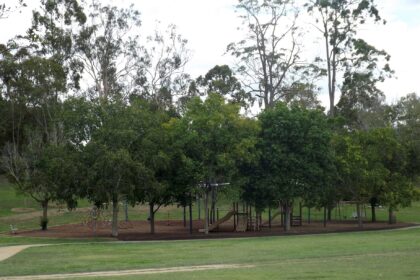
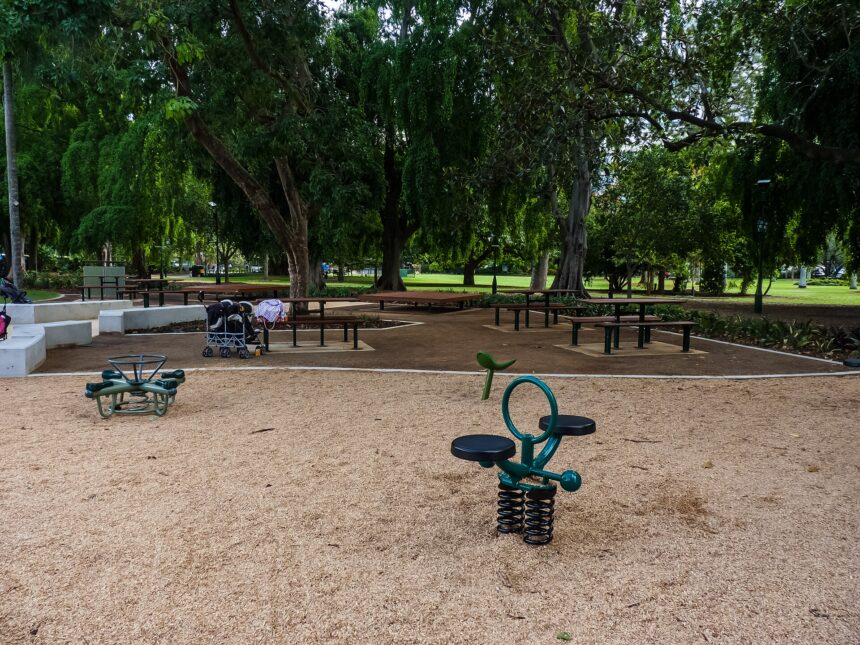
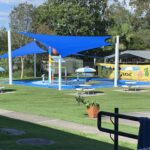
Shade helps, but Cancer Council says shade alone can reduce UV exposure by up to 75%, which is a reason to add a hat and sunscreen rather than a reason to skip them. At 9 November 2026, Brisbane City Council says it has installed more than 370 new shade sails across the city since 2023. Its sun-safe playground list names a handful of parks worth knowing.
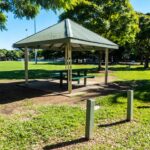

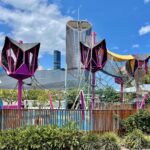
- Moora Park in Shorncliffe has a well-shaded playground with shade sails and trees, near the beach.
- Mowbray Park in East Brisbane has a boat-themed playground under shade sails, and it is close to the Mowbray Park ferry terminal.
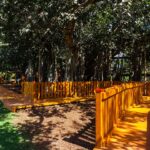
- Sherwood Arboretum has one playground under shade sails and a nature play area under fig trees.
- Wynnum Wading Pool Park has large trees around the playground, with shade sails adding more cover.
- Fernwood Place Park in Taigum has a space-themed playground with shade sails over it.
Indoor cool-down options
Council’s rainy-day list doubles as a hot-day list, because the venues are indoors. None of the pages we checked promises air-conditioning, so it is worth confirming with the venue if cool air matters to you. Council’s list begins with visiting your local library.
Queensland Museum Kurilpa is a solid midday stop. At 9 November 2026, entry is free, though SparkLab, some exhibitions and some events charge a fee. At the same date it is open daily from 9:30am to 5pm. The museum is accessible for prams and strollers, and children aged 12 and under must be accompanied at all times.
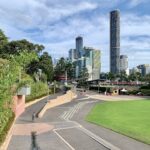
Council also lists the Museum of Brisbane at Brisbane City Hall, with exhibitions, tours and kids’ activities. At 9 November 2026, council’s list says the Gallery of Modern Art precinct in South Brisbane has free exhibitions at the Children’s Art Centre. For burning off energy, council’s list includes indoor venues such as Urban Xtreme in Hendra, iFLY in Chermside and suburban cinemas at Red Hill and Newmarket. Admission for the commercial ones is not covered here, so check before you go.
Council also points to environment centres at Boondall, Karawatha and Chermside West, with interactive displays and nature trails.
Sun and heat safety basics
UV is not the same as heat. Cancer Council says temperature does not affect UV levels, and UV can still be strong on cool, cloudy days. UV levels of 3 or above can start to damage skin. The Queensland Government says the UV Index is high enough all year round to cause skin damage, and recommends a broadbrim or bucket-style hat that covers the head, neck and ears. Cancer Council describes five forms of protection: slip, slop, slap, seek and slide.
Sources differ on the minimum sunscreen strength: the Queensland Government sun page says SPF30 or higher, while HeatSafe and Cancer Council say SPF 50+. HeatSafe says to apply SPF 50+ generously to all exposed skin, and the Queensland Government sun page says to reapply sunscreen regularly.
For clothing, HeatSafe suggests loose-fitting, single-layered cotton clothing. It also suggests giving children easy access to plain water. A damp muslin wrap over a pram can provide shade while letting air circulate.
Cooling down and warning signs
To cool a child at home, HeatSafe suggests lukewarm baths or showers or a cool damp cloth, and warns not to use ice-cold water because sudden temperature changes can cause fainting. Watch for warning signs such as unusual tiredness or difficulty waking, confusion or irritability, loss of coordination, severe headache, nausea or vomiting. If you suspect heatstroke, call Triple Zero (000) immediately.
Never leave children or pets alone in a hot car. The Queensland Government says a parked car’s interior can be as much as 30 to 40 degrees higher than the outside temperature.
Frequently asked questions
What time of day is hottest for kids outdoors in Queensland?
Queensland HeatSafe advises keeping children indoors during the hottest part of the day, 10am to 3pm.
Is shade enough to protect my child from the sun?
Shade can reduce UV exposure by up to 75% according to Cancer Council, but it is one of five forms of protection alongside clothing, sunscreen, a hat and sunglasses.
Does it need to be hot for UV to be a problem?
No. Cancer Council says temperature does not affect UV levels and UV can be strong on cool, cloudy days.
What should I do if I think my child has heatstroke?
Queensland HeatSafe says to call Triple Zero (000) immediately.